
Winter Skin Barrier Routine for Menopause in Three Steps
This post contains affiliate links. If you buy through them, I may earn a small commission at no extra cost to you. I only share products I would feel good recommending.
Have you noticed that your favorite moisturizer suddenly does not keep up once the air turns cold? Your skin feels tight by midday, your cheeks flake, and your hands look older than they did last summer.
Cold air, indoor heat, and menopause dryness stack up. The good news is that a winter skin barrier routine can be simple, and it only takes three steps.
In this post, I will walk you through those three steps. I will also share product picks from my Petal Path database and a quick mammogram-day tip for October.
Quick answer: A winter skin barrier routine for menopause takes three steps. Cleanse gently with warm water and a fragrance-free cleanser. Replenish with a rich cream while your skin is still damp. Protect with a mineral sunscreen every day. Add a cool-mist humidifier in your bedroom, and keep showers warm, not hot.
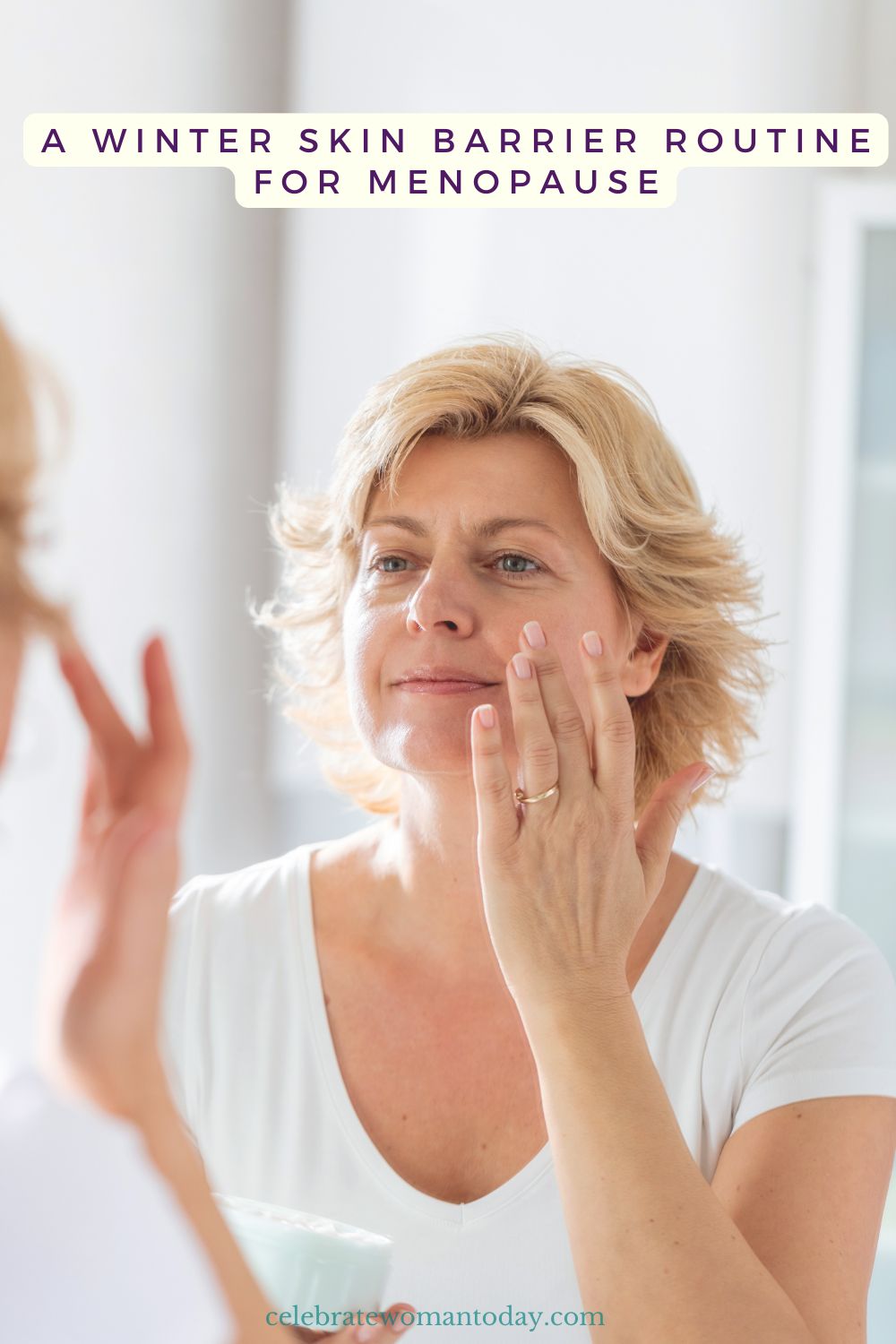
Why Menopause Skin Needs a Winter Skin Barrier Routine
Your skin barrier is the outer layer that keeps water in and irritants out. Menopause can leave it less resilient. A 2025 study in Skin Research and Technology found lower skin hydration and more itching in postmenopausal participants than in a reproductive-age group.
Winter adds to it. The American Academy of Dermatology advises heavier creams and warm instead of hot water. It also suggests a filtered, cool-mist humidifier in the bedroom.
This is where I begin with my Skin Integrity Framework. It rests on five petals, and a healthy barrier comes first.
For my personal routine, I start using more of bi-phase mists prior to any product layering. It helps my skin to lock in moisture, thus creating a more robust protective barrier. After that, I proceed with my serum focusing on the problem areas, and finishing with an SPF for morning or a chosen treatment for the night time.
What You Need for a Winter Skin Barrier Routine
You do not need a full shelf. Here is the short list:
- A gentle, fragrance-free cleanser
- Your favorite barrier cream
- Mineral sunscreen
- A cool-mist humidifier for your bedroom
- About five minutes in the morning and five in the evening
Step 1: Cleanse Gently in Warm Water
The first part of your winter skin barrier routine is a gentle cleanse. Use a mild, fragrance-free cleanser and apply it only where you need it. Hot water and harsh cleansers strip the barrier, so keep the water warm. The AAD suggests limiting baths and showers to five to ten minutes and choosing fragrance-free products.
Water-based: Try the Marie Veronique Gentle Gel Cleanser or the ILIA The Cleanse pH Balanced Foaming Facial Cleanser.
Oil-based: Try the Marie Veronique Replenishing Oil Cleanser.
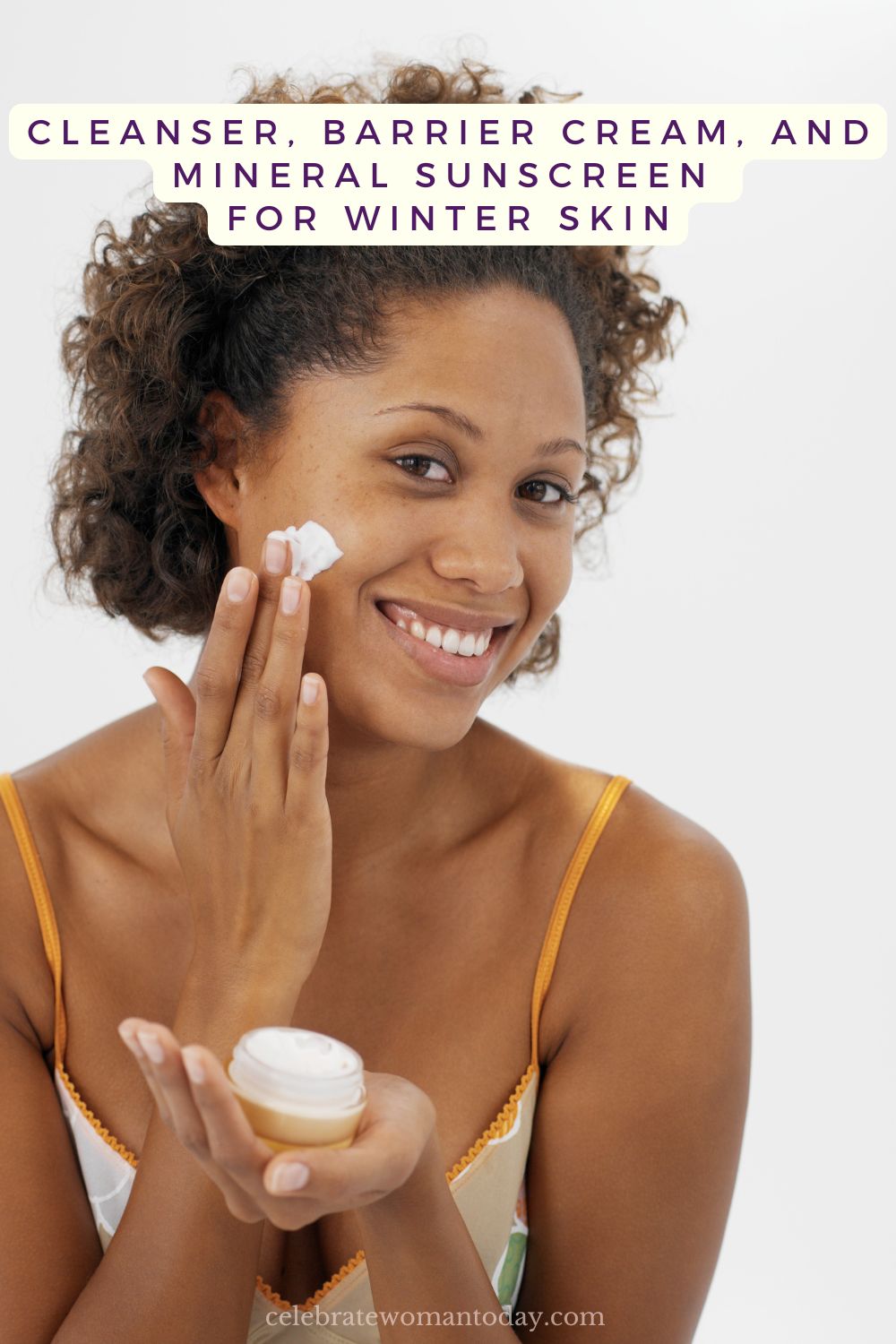
Step 2: Replenish on Damp Skin
Replenishing is the heart of a winter skin barrier routine. Apply your cream right after washing, while your skin is still damp. The AAD advises moisturizing right after bathing to lock in moisture, and choosing a heavier cream when it is cold.
Optional serum: The Marie Veronique Barrier Restore Serum adds a step before your cream.
Cream: Try the ILIA Barrier Build Skin Protectant Cream or the 100% Pure Restorative Sea Culture Extra Riche Crème. You can also try the One Love Organics Skin Dew Coconut Water Cream or the Farmacy Honey Halo Ultra-Hydrating Ceramide Moisturizer.
Step 3: Protect With Mineral Sunscreen
Wear sunscreen every morning, even on cloudy days. The AAD advises a broad-spectrum, water-resistant sunscreen with an SPF of 30 or higher. It notes that snow reflects UV rays. It also says up to 80 percent of the sun’s harmful rays can penetrate clouds.
Sunscreen: Try the Beauty by Earth Barrier Protection Hydrating Mineral Face Sunscreen (SPF 50). You can also try the Beauty by Earth Invisible Matte Barrier Defense Ceramide Sunscreen Serum Face Serum (SPF 30).
Lips: The AAD suggests lip balm outdoors. The Ursa Major Going Places Lip Balm fits in a coat pocket.
Extra Comfort for Your Winter Skin Barrier Routine
A cool-mist humidifier in your bedroom helps with dry indoor air. The AAD also suggests bundling up instead of turning up the heat, and wearing soft fabrics such as cotton or silk.
The AAD advises cutting back on products with alpha or beta hydroxy acids in cold weather, because they can irritate. So if your skin feels tight, pause your acids during the coldest weeks. I explain how to bring them back in my post on why acids are great for menopause skin.
Vitamin A, such as retinol, belongs in the evening only. Use it only when your barrier feels calm.
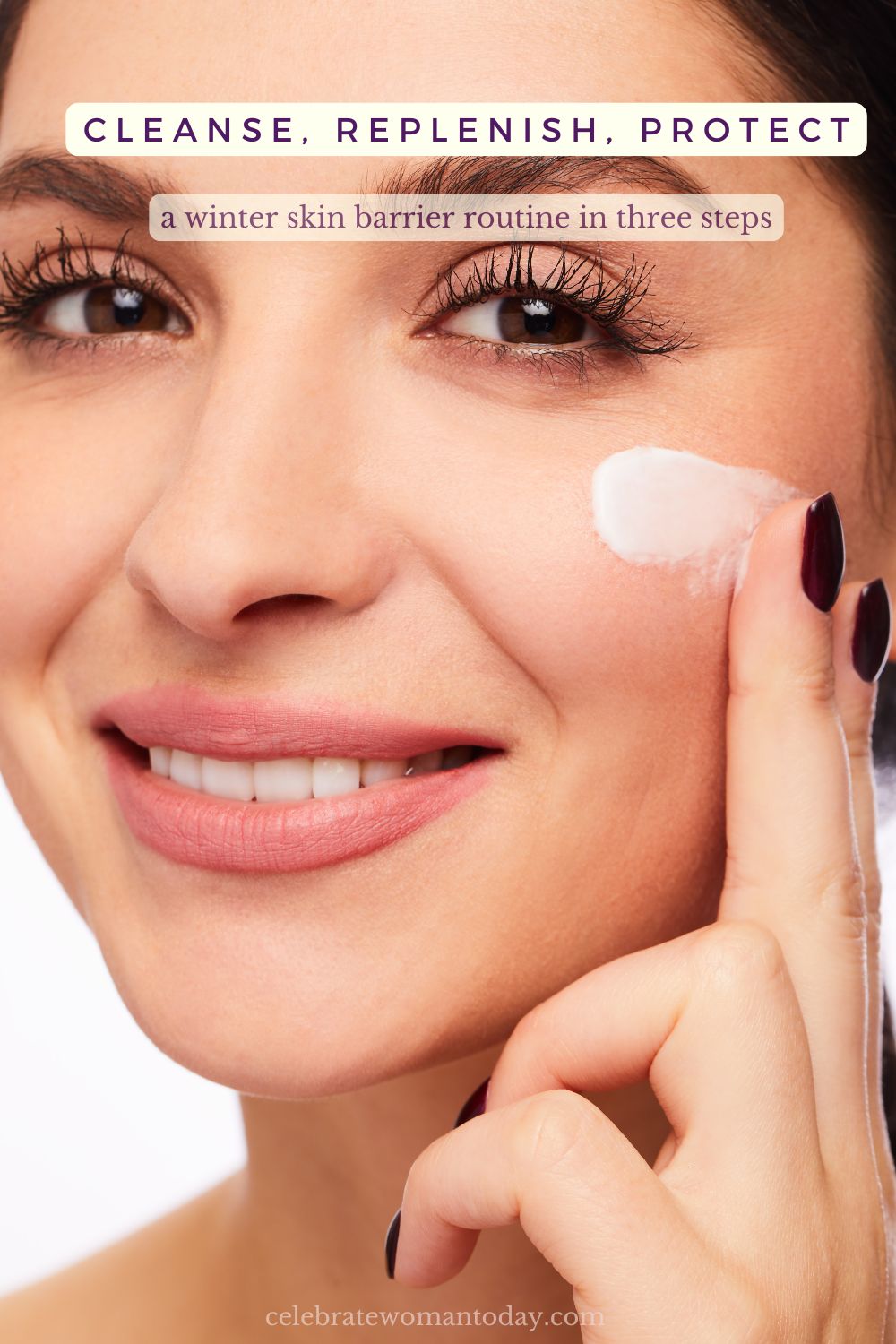
Your October Moment: Mammogram Day Skin Prep
October tip: The American Cancer Society says not to wear deodorant, antiperspirant, powders, lotions, or perfumes under your arms or on your breasts on the day of your test. They can create white spots on the image, so plan your routine around your appointment. If your underarm skin is sensitive, my post on aluminum-free deodorant for menopause may help.
For the full guidance, visit the American Cancer Society and talk with your care team about your own screening schedule.
Keep Your Winter Skin Barrier Routine Going
A winter skin barrier routine works best when you keep it going all season. Consistency is what changes skin, and tracking helps you notice what your skin likes. My Skin Care Routine Digital Planner Journal gives you a simple place to record your routine and your skin changes. Get the Skin Care Routine Planner
You may also like my gentle skincare reset, my post on menopause skin thinning, and my post on skin after breast cancer.
Frequently Asked Questions About Winter Skin Care
Q: What is the best winter skincare routine for menopause skin?
A: Keep your winter skin barrier routine to three steps. Cleanse gently with warm water and a fragrance-free cleanser. Replenish with a rich cream while your skin is still damp. Protect with a mineral sunscreen every morning. A cool-mist humidifier in your bedroom helps too.
Q: Why is my skin so dry in winter since menopause?
A: Menopause can leave the skin barrier less resilient. A 2025 study in Skin Research and Technology found lower skin hydration in postmenopausal participants. Cold air and indoor heat then pull more moisture away, so a rich cream and gentle cleansing help.
Q: Should I use a heavier cream in winter?
A: Yes, many women do. The American Academy of Dermatology advises switching to heavier creams in cold weather and applying moisturizer right after washing. Ointments and creams work better than lotions for dry skin.
Q: Do I need sunscreen in winter?
A: Yes. The American Academy of Dermatology advises a broad-spectrum, water-resistant sunscreen with an SPF of 30 or higher. It notes that snow reflects UV rays, and that up to 80 percent of the sun’s harmful rays can penetrate clouds.
More Questions About a Winter Skin Barrier Routine
Q: Is hot water bad for menopause skin?
A: Hot water can strip the skin barrier. The AAD advises warm water instead of hot, and suggests limiting baths and showers to five to ten minutes. Pat your skin dry and moisturize while it is still damp.
Q: Can I wear lotion or deodorant to a mammogram?
A: No. The American Cancer Society says not to wear them on the day of your test. That includes deodorant, antiperspirant, powders, lotions, and perfumes under your arms or on your breasts. They can show up as white spots on the image.
Q: Should I stop my acids in winter?
A: The American Academy of Dermatology advises cutting back on products with alpha or beta hydroxy acids in cold weather because they can irritate. If your skin feels tight or stings, pause them for now. Bring them back one at a time when your skin feels ready.
Q: How do I know my skin barrier is damaged?
A: In my experience as an esthetician, a stressed barrier often shows up as tightness, stinging, flaking, or redness. Products that used to feel fine may begin to sting. If this is you, simplify your routine and return to the three steps. If it persists, ask your healthcare provider.
Sources
Cvjetković Nikoletić et al. Skin Research and Technology, 2025. View study
American Academy of Dermatology. Cold weather and your skin, Dermatologists’ tips to relieve dry skin, and sun protection in winter.
American Cancer Society. What to know before you go for a mammogram (revised July 23, 2026).
Written by Larisa Jentzsch, Licensed Esthetician and founder of Celebrate Woman Today. Larisa holds a Master’s in Education (MEd) and an MBA with a thesis centered on Health Promotion, and teaches women 40+ how to understand and support their changing skin.


I want to know what kind of cleansers and serums are better for the winter time. My skin is super dry and sensitive and anything I do does not change the moisture. What do I do in this situation?
Hi Jennifer,
If you really have dry skin type with expressed sensitivities from what you’ve described, you need to evaluate your practices first: what water you cleanse your skin with (hot or lukewarm); what ingredients your products have (some of them can be irritants to your skin and disallow it to heal properly and irritate the thinned skin layers); what skin treatments you use at home like vitamin A (retinoids); if you’re using harsh products like scrubs and acids.
Just evaluating using the list above would help you to see if anything is done to your skin is too harsh for it.
Try to heal your barrier by sticking to a simple routine (gentle cleanser, moisturizer, SPF in the morning), avoid any skin treatments, use warm water for skin’s needs.
Stick to this simple routine for 7 days. Then, re-evaluate before proceeding with something else.
Again, if you have access to your esthetician, it would be so helpful for you to consult and get her opinion.
Hope it helps.
Such a beautiful post and a good reminder for me what those product layering steps are. I need a better understanding of what to layer after what.