
Menopause Skin Thinning and How to Support Skin Density
This post contains affiliate links. If you buy through them, I may earn a small commission at no extra cost to you. I only share products I would feel good recommending.
Does your face feel thinner and more fragile than it used to? Maybe your skin looks a little crepey, or it feels less cushioned, or it marks more easily than it did a few years ago.
Your skin is not betraying you. Menopause skin thinning is a real change, and it deserves a new kind of support, not more products piled on top.
In this post, I will explain why skin thinning happens, which five supports matter most for skin density, and how to choose products without guessing. I will also share a simple morning and evening routine.
Quick answer: Menopause skin thinning happens because falling estrogen reduces collagen and skin thickness over time. You cannot rush it, but you can support it. Protect your barrier, add antioxidant support, bring in gentle Vitamin A at night, wear sunscreen every day, and feed collagen production from within. Firm skin is a system, not one product.
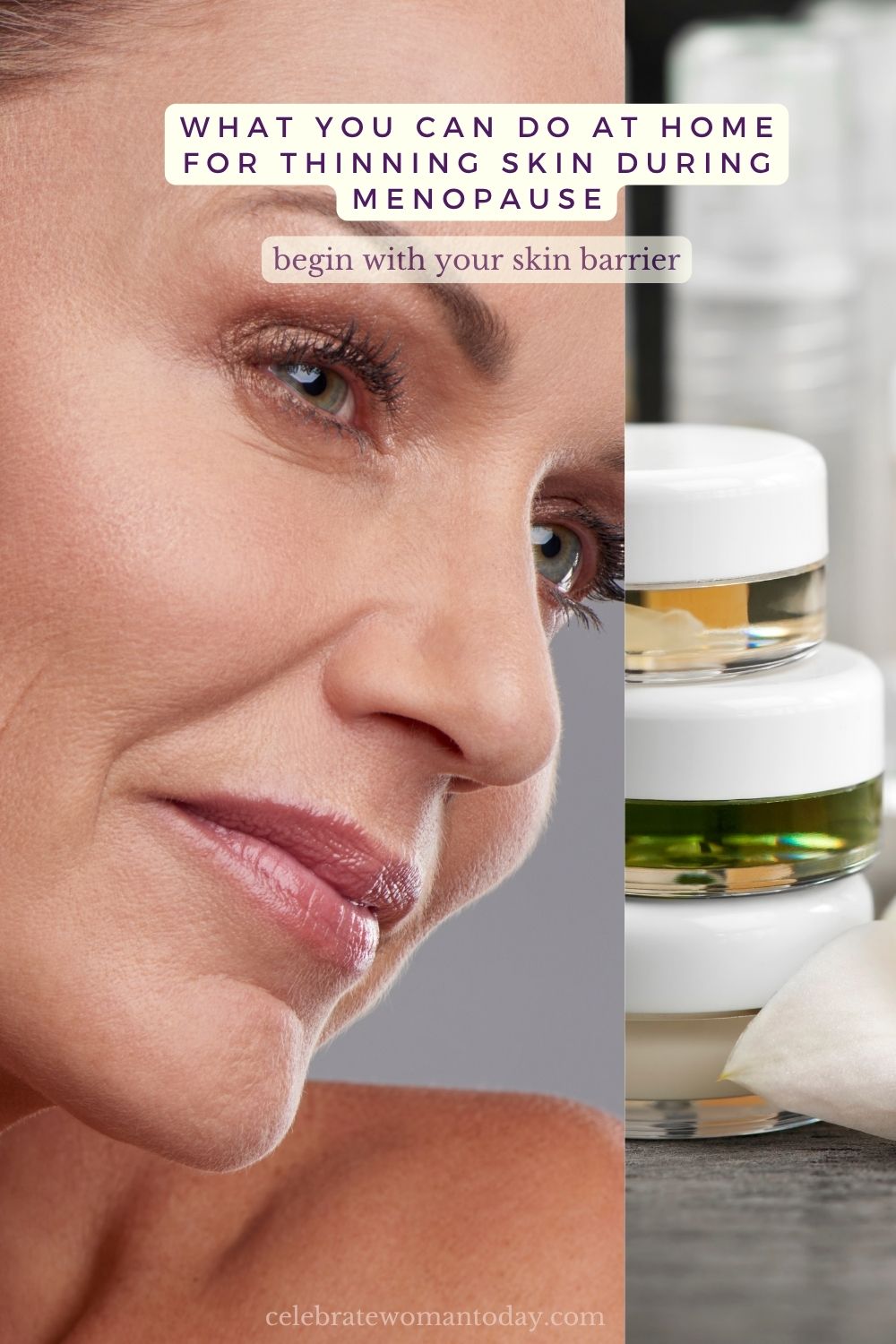
What Menopause Skin Thinning Means
Your skin has layers. The deeper layer, called the dermis, holds collagen and elastin. Collagen is the protein that gives skin its structure and thickness. Elastin helps it spring back.
When people talk about thinning skin in menopause, they mean the skin has less of that structure than before. It can feel more delicate, look less plump, and show lines more easily. Loss of skin density is simply the everyday name for it.
A change like this is common. It also deserves care, because thin skin needs gentle handling and steady protection.
Why Estrogen Decline Thins Your Skin
Estrogen supports your skin’s collagen. When it drops, the collagen in your skin drops too.
In a classic study in Obstetrics and Gynecology, researchers measured skin collagen in postmenopausal women and found it had declined. Earlier work in the British Journal of Obstetrics and Gynaecology found that long-term menopause and falling hormone levels were linked to a measurable reduction in skin thickness.
A 2025 review in the Journal of Cosmetic Dermatology and a 2022 paper in Menopause describe the wider picture. Menopause brings changes in firmness, hydration, elasticity, and pigmentation together.
So when your skin feels thinner, you are not imagining it. Medical research has documented it for decades.
If you wonder whether any treatment is right for you, that is a conversation for your healthcare provider. What I can do here is show you how to support the skin you have today.
My Take on Skin Density as an Esthetician
Having been an esthetician and going myself through ups and downs in my skin care journey, thinner skin and all ramifications it entails during hormonal change can be disruptive and infuse a sense of frustration. However, when we take these changes in skin with calm and peace at heart, careful research and application, truly magnificent things do happen.
In my work, I think of this as the Skin Integrity Framework. It rests on five petals, and a healthy barrier comes first. Everything below builds on that, and the first step connects to my post on a gentle skincare reset.
Five Ways to Support Skin Density
Menopause skin thinning is not solved by one serum. I find that skin density works best as a system, with five supports working together.
1. Rebuild the Barrier First
A tired barrier loses water faster, and thinner skin feels it sooner. A 2025 study in Skin Research and Technology found lower skin hydration in postmenopausal participants than in a reproductive-age group, and more itching.
So start with a gentle cleanser, a hydrating step, and a cream. If your skin feels reactive, pause your strong actives first.
2. Add Antioxidant Support With Vitamin C
Vitamin C is a required cofactor for collagen synthesis, according to NCBI StatPearls. In a 1998 study in the International Journal of Cosmetic Science, vitamin C and its derivatives stimulated collagen production in human skin cells in the lab.
That is lab evidence, not a promise for your face. It does explain why I like a vitamin C serum in the morning. Start with a few mornings a week if your skin is sensitive.
3. Bring In Vitamin A Gently, at Night
Vitamin A, such as retinol, belongs in your evening routine only. Start slowly, apply it to dry skin, and use it only when your barrier feels calm. If your skin stings, step back for a while.
If you live with a hormone-sensitive condition or you are in treatment, ask your care team before you add it.
4. Protect Your Skin Every Day
Sunscreen is the step most of us skip. The American Academy of Dermatology advises a broad-spectrum, water-resistant sunscreen with an SPF of 30 or higher on exposed skin, and notes that up to 80 percent of the sun’s harmful rays can penetrate clouds. I choose mineral sunscreens for sensitive menopause skin.
5. Support Your Skin From Within
This is where my Inner Skin Foundation Protocol comes in. It has four pillars. Building blocks, such as the amino acids L-Lysine and L-Proline. Synthesis, which means vitamin C and its cofactors. Antioxidant protection from botanicals. And extracellular matrix support, the structural environment where collagen and elastin are organized.
A 2024 review in Frontiers in Nutrition looked at randomized clinical studies of French maritime pine bark extract. It reported benefits for skin hydration, elasticity, and smoothness. You can read more in my post on plant-based collagen support for menopause skin.
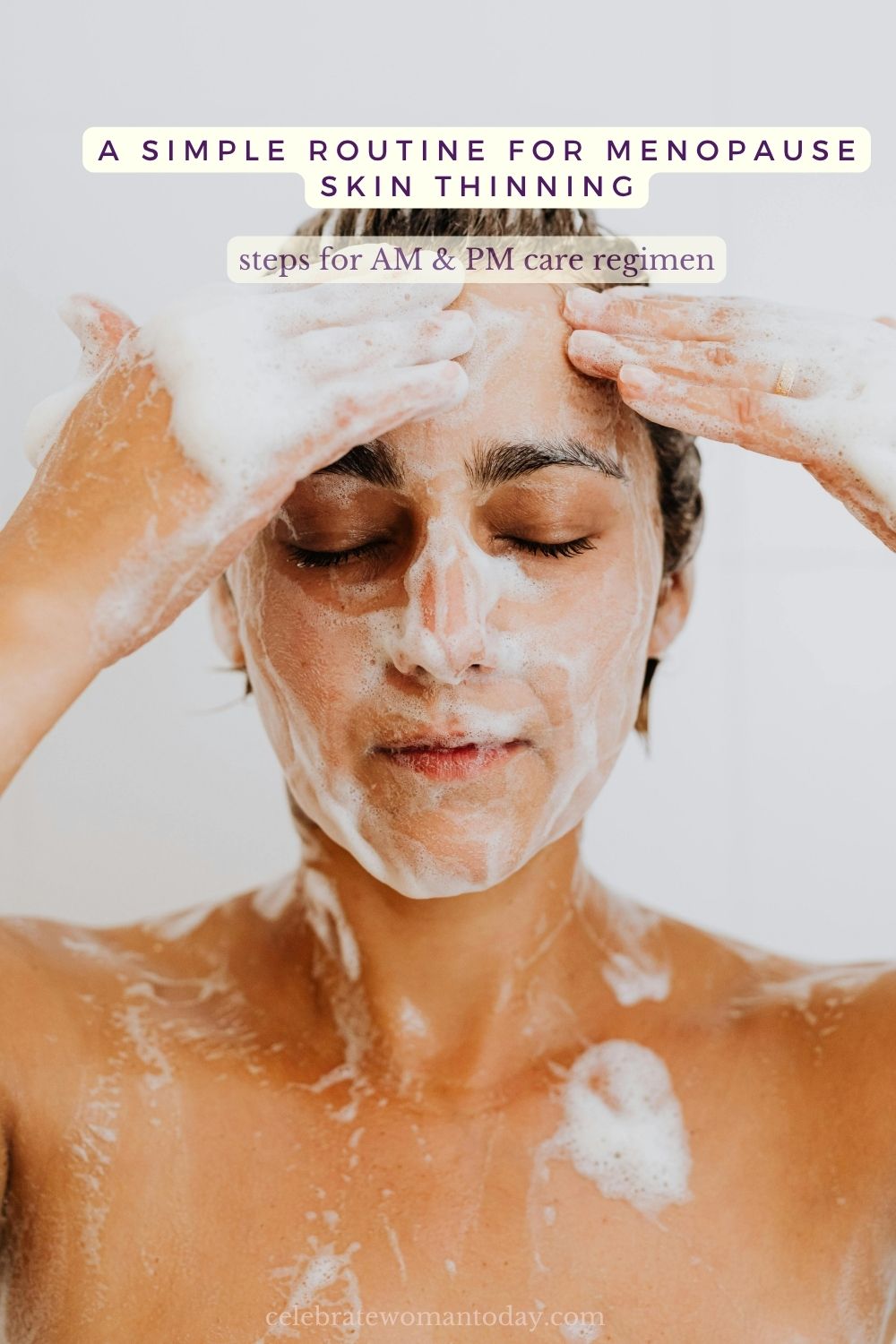
Facial Work for Thinner Skin
Thinner skin deserves a lighter touch. I use my hands and gua sha only, with gentle pressure, and I focus on lymphatic flow and the fascia. I skip rollers.
A few quiet minutes in the evening is plenty. If your skin feels sore, reddened, or bruises easily, skip the facial work and let it rest.
Products for Menopause Skin Thinning From The Petal Path
Every pick below comes from my Petal Path database, from the Firmness and Fine Lines & Wrinkles tabs. I review each product against my standard, which means effective and free of the ingredients I do not trust. Please read the ingredient list yourself before you buy, because brands reformulate.
Cleanse. Gentle and non-stripping matters most, because firm skin starts with a healthy barrier. Try the Marie Veronique Refining Cleanser or the One Love Organics Botanical A Facial Cleanser.
Mist or tone. This is a light hydrating step. Try the 100% Pure Watermelon Cucumber Water Locking Mist or the 100% Pure Restorative Sea Culture Hydrating Toner.
Antioxidant and support serums. Try the Marie Veronique Vitamins C+E+Ferulic Serum, the FarmHouse Fresh Green Fixer Calming Elixir Organic Matcha Serum, or the Alpyn Beauty Hydrating Firming Serum.
Cream. Try the Marie Veronique All Day Age-Delay Emulsion or the One Love Organics Skin Savior Multi-tasking Wonder Balm.
Eyes. The One Love Organics Botanical E Eye Balm is a gentle choice for the delicate skin around your eyes.
Protect. Choose a mineral sunscreen every morning. Try the Marie Veronique Sheer Tint Zinc SPF 30 or the Marie Veronique ColorFree Zinc SPF 32.
Night, optional. The Marie Veronique Gentle Retinol Night Serum is for evening only, and only when your barrier is calm. Skip it during treatment unless your care team approves.
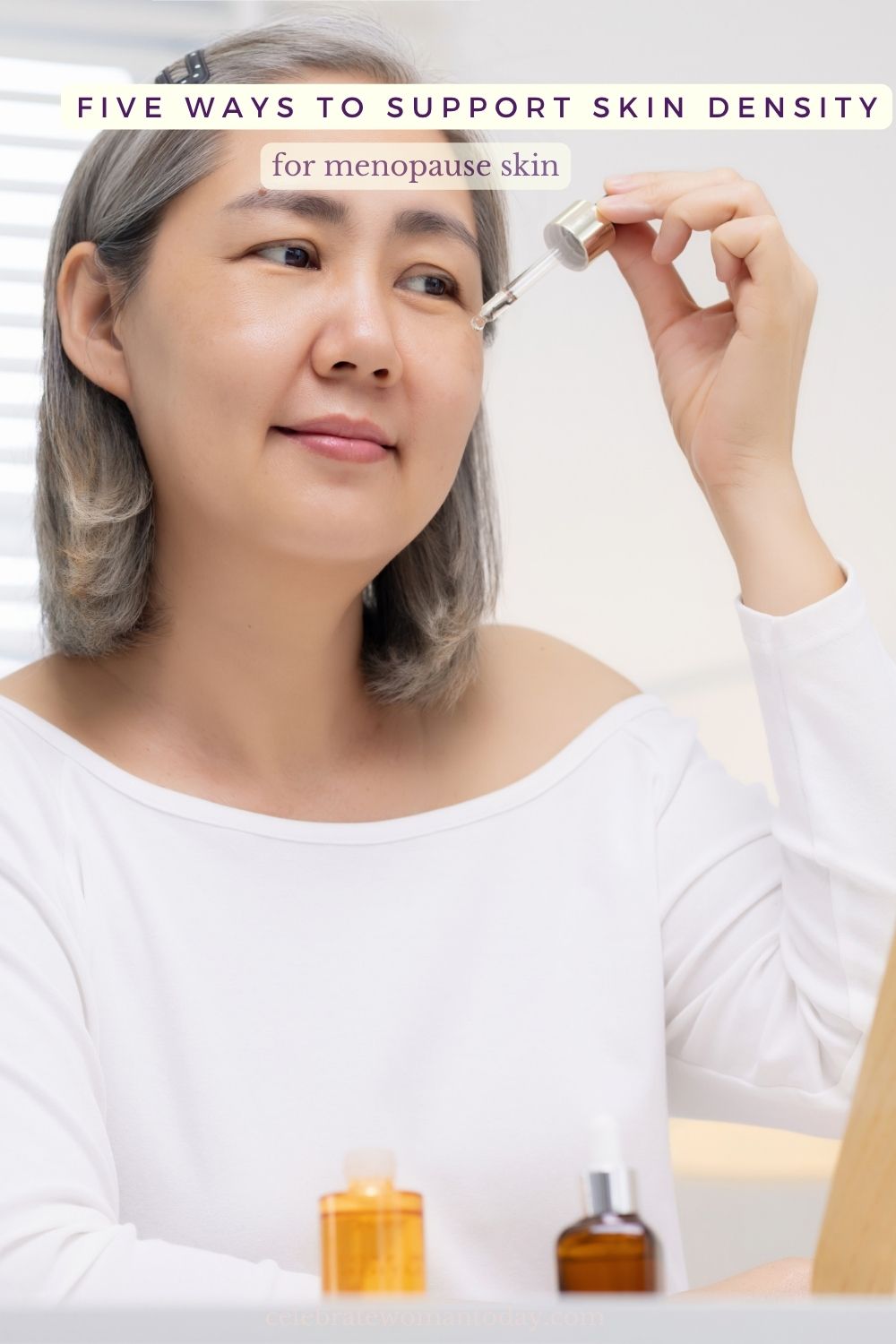
A Simple Routine for Menopause Skin Thinning
Morning: cleanse, mist, antioxidant serum, cream, and sunscreen.
Evening: cleanse, serum, and cream. Add Vitamin A only on the nights you choose, and give your skin a rest on the others.
Change one thing at a time, so you can tell what your skin welcomes. Thinning skin in menopause responds best to steady, gentle habits.
Your October Moment: Know Your Normal
October is Breast Cancer Awareness Month, and it is a good time to know your normal, skin edition. The American Cancer Society (ACS) says to know what your breasts normally look and feel like, so you will notice any changes.
Among the changes the ACS says to have checked are skin dimpling that can look like an orange peel, nipple or breast skin that is red, dry, flaking, or thickened, and swelling of all or part of a breast. This is awareness, not self-diagnosis. If you notice something new, tell your healthcare provider.
For women at average risk, the ACS says women 40 to 44 can choose to start yearly mammograms, women 45 to 54 should have one every year, and women 55 and older can switch to every other year or continue yearly. Your own history matters, so talk with your care team about your schedule.
Your Next Gentle Step
Menopause skin thinning is not a failure, and it is not the end of firm, glowing skin. It is a signal that your skin wants steadier support. Give it a few quiet weeks to respond.
If you would like a guided start, my free REGENERATE opt-in is waiting for you. Get My Free REGENERATE Guide
Frequently Asked Questions About Skin Thinning
Q: Why does my skin feel thinner since menopause?
A: Falling estrogen lowers skin collagen, and research has linked menopause with reduced skin thickness. A 1987 study in Obstetrics and Gynecology found lower skin collagen in postmenopausal women, and earlier work linked long-term menopause with a measurable reduction in skin thickness. It is a documented change, and gentle support can help your skin feel more comfortable.
Q: How fast does collagen decline after menopause?
A: It varies from woman to woman, so I will not give you a number. Research shows collagen declines as estrogen falls, and a 2025 review in the Journal of Cosmetic Dermatology describes these changes as cumulative. If you are worried about changes in your skin, speak with your healthcare provider.
Q: Can skincare help thin skin?
A: Skincare cannot rebuild what hormones changed, but it can support your skin. A strong barrier, antioxidants, gentle vitamin A at night, and daily sunscreen all help skin feel and look better. Think of it as supporting the skin you have, with steady habits.
Q: Is Vitamin C worth using on thinning skin?
A: Vitamin C is a required cofactor for collagen synthesis, and in lab studies it stimulated collagen production in human skin cells. That is not a promise for your face, but it is a good reason to use it. Start a few mornings a week and watch how your skin responds.
More Questions About Menopause Skin Thinning
Q: Should I use retinol on thin menopause skin?
A: Many women do, with care. Use it at night only, start slowly, apply it to dry skin, and use it only when your barrier feels calm. If your skin stings, pause and return to a simple routine. If you are in treatment or have a hormone-sensitive condition, ask your care team first.
Q: Does sunscreen really matter for thin skin?
A: Yes. The American Academy of Dermatology advises a broad-spectrum, water-resistant sunscreen with an SPF of 30 or higher on exposed skin, and notes that up to 80 percent of the sun’s harmful rays can penetrate clouds. I recommend a mineral sunscreen every morning.
Q: What are the signs of skin changes I should show a doctor?
A: The American Cancer Society says to have these breast changes checked: a new lump, swelling, skin dimpling that can look like an orange peel, nipple or breast skin that is red, dry, flaking, or thickened, breast or nipple pain, nipple retraction, nipple discharge, and swollen lymph nodes under the arm or near the collarbone. Any new change is worth a call to your provider.
Q: How long does it take to see a difference?
A: Every woman is different, so I do not set a calendar. Barrier comfort often shows up first, while firmness builds slowly with steady habits. Give each change time, and change one thing at a time.
Sources
Brincat M. et al. Skin collagen changes in postmenopausal women. Obstetrics and Gynecology, 1987. View study
Brincat M. et al. Long-term skin thickness changes after menopause. British Journal of Obstetrics and Gynaecology, 1985. View study
Viscomi B., Muniz M., Sattler S. Journal of Cosmetic Dermatology, 2025. View study
Levin Y.S. Cosmetic dermatology in menopause. Menopause, 2022. View study
Cvjetković Nikoletić et al. Skin Research and Technology, 2025. View study
Boyera N., Galey I., Bernard B.A. International Journal of Cosmetic Science, 1998. View study
Abdullah M. et al. Vitamin C. StatPearls, NCBI. View
Weichmann F., Rohdewald P. Frontiers in Nutrition, 2024. View study
American Academy of Dermatology. Sun protection in winter
American Cancer Society. Breast cancer signs and symptoms (revised July 23, 2026) and screening recommendations
Written by Larisa Jentzsch, Licensed Esthetician and founder of Celebrate Woman Today. Larisa holds a Master’s in Education (MEd) and an MBA with a thesis centered on Health Promotion, and teaches women 40+ how to understand and support their changing skin.



Would like to try any of the products you recommend. I want to know what serums are good for really reactive skin. Thank you.
beautifully said and done! I just need to be more proactive with my skin care.
I would take any of these tips! Especially the one with easy products to care for my skin in the morning and evening.
I love this post for its simplicity to understand how to work on thinning menopause skin. My skin is thin, and I want it to look brighter, tighter and more attractive. Need all I can get to get it right.