Skin After Breast Cancer Treatment When Menopause Arrives
This post contains affiliate links. If you buy through them, I may earn a small commission at no extra cost to you. This post shares general education and is not medical advice.
If menopause arrived with your breast cancer treatment, your skin may feel like a stranger. It can be drier, itchier, and more sensitive than you remember, and the products that once worked may now sting.
You are not imagining it, and you are not alone. Skin after breast cancer treatment often needs a quieter, simpler kind of care, and your care team comes first.
In this post, I will explain why skin changes after treatment, what a minimal routine can look like, and what to leave out for now. I will also share a short checklist of questions to bring to your next appointment.
Quick answer: Breast cancer treatment can bring menopause or menopause-like symptoms, and skin may feel drier, itchier, thinner, and more sensitive. Start with your care team, then keep skin care simple: a mild fragrance-free cleanser, a light moisturizer, and sun protection. Hold off on acids and strong actives until your team says they are fine.
Why Skin After Breast Cancer Treatment Changes
Breastcancer.org explains that chemotherapy can affect the ovaries, and that ovarian suppression medicines temporarily halt ovary function. Hormonal therapy does not cause menopause itself, but it can produce menopausal symptoms.
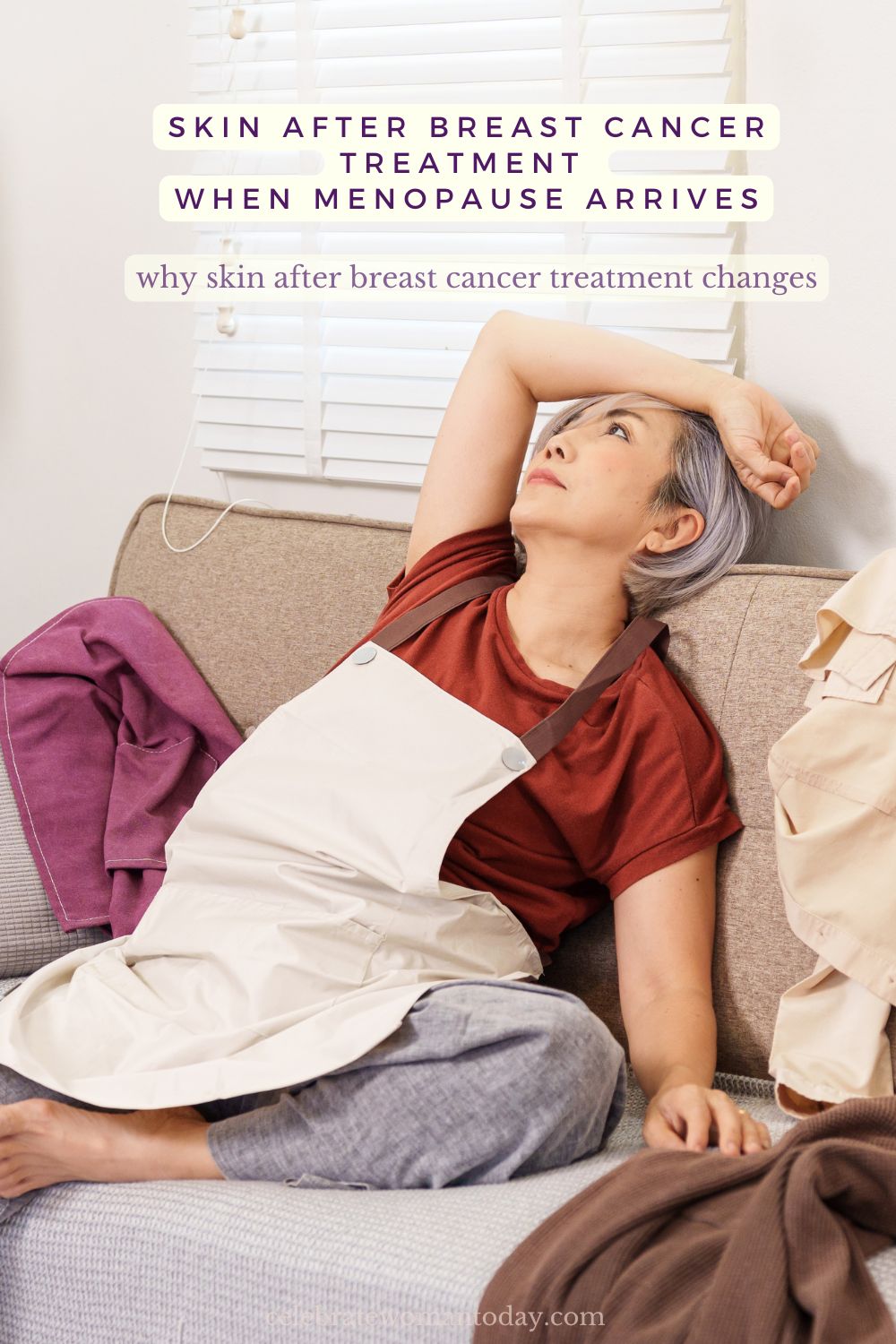
Many women notice skin after cancer treatment feels different, and there are reasons for that. The same page notes that as you move through menopause, your skin may feel drier, itchier, thinner, and much more sensitive.
Treatment itself can also affect your skin. The National Cancer Institute lists dry and peeling skin, itching, sun sensitivity, rashes, and darkened or reddened skin among the skin changes that cancer treatment can cause.
So two things can overlap: menopause changes and treatment changes. That is a lot for skin after breast cancer to carry, and it deserves a gentle hand.
Care Team First, Always
Please ask your care team before you add any product, especially near a treated area. Every treatment plan is different, and your team knows yours.
Cancer Australia notes that radiotherapy staff can recommend which products to use during treatment. They can also tell you what to keep off the treated area, such as perfume, deodorant, or hair dye.
I am a licensed esthetician, not part of your oncology team. Skin care after breast cancer starts with their advice, so please check whatever I share here with them first.
A Quiet Routine for Skin After Breast Cancer
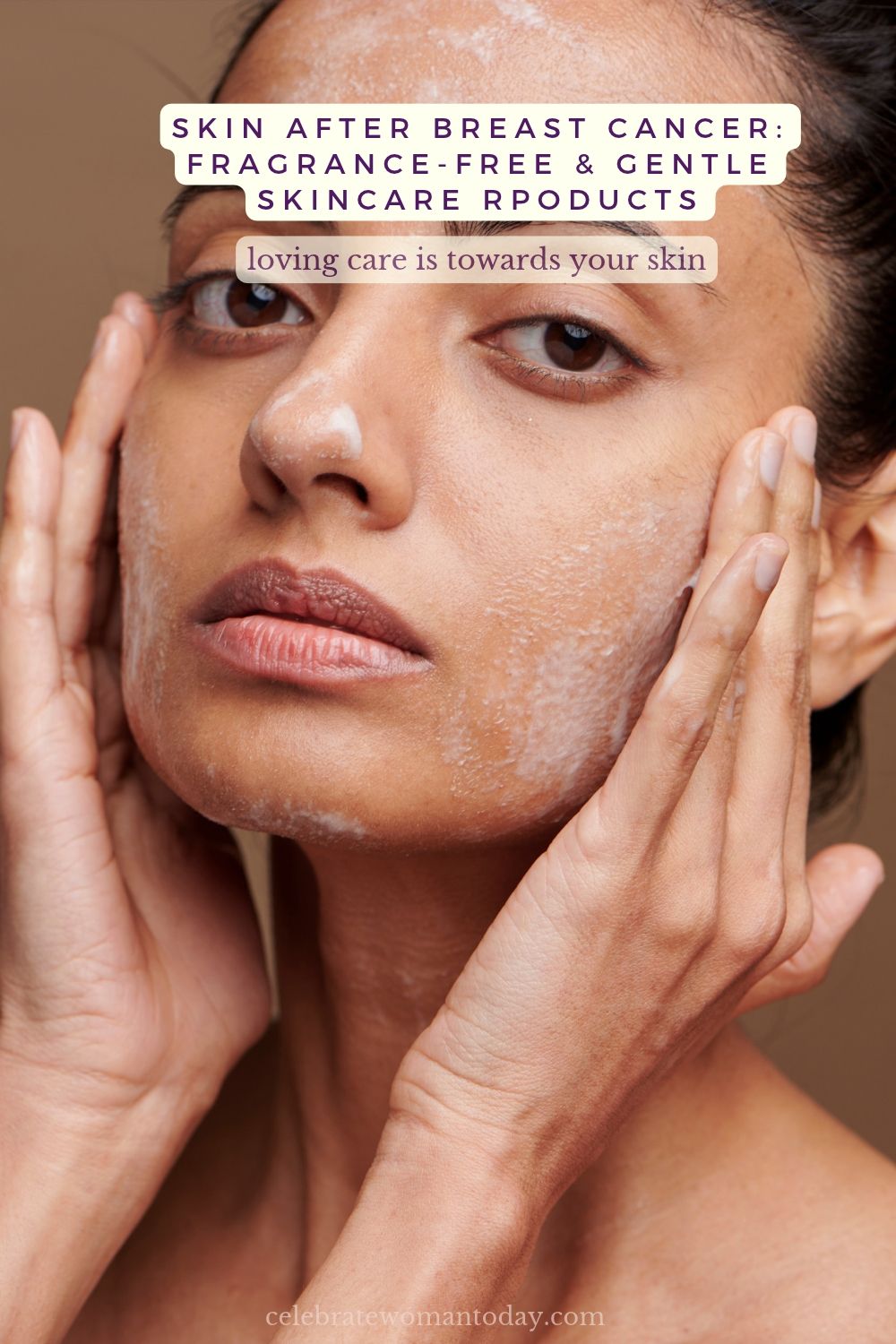
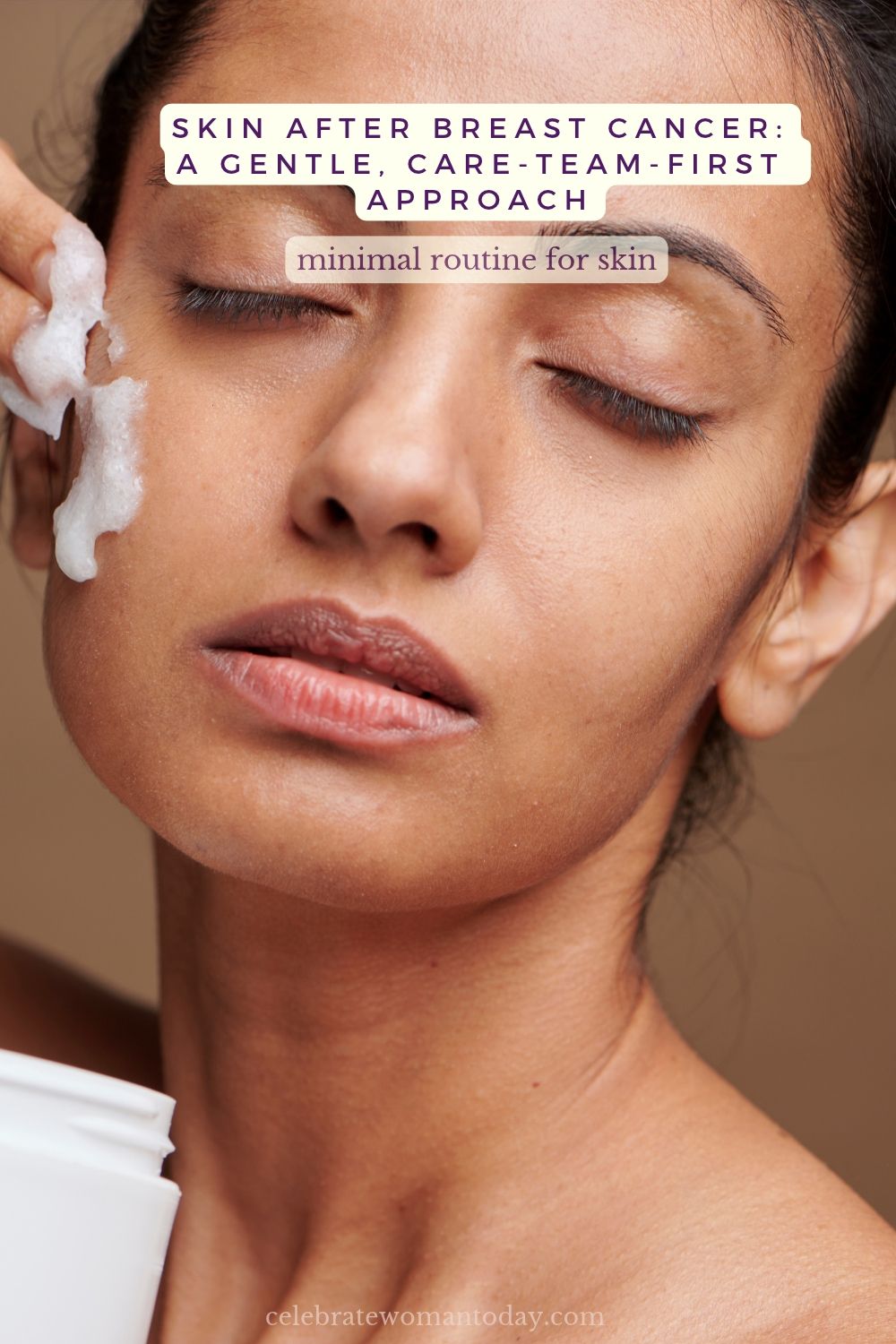
For skin after breast cancer, I keep the routine small. When skin feels sore and sensitive, less is kinder. Cleanse, soften, moisturize, and protect. Choose products labeled fragrance-free, and read the ingredient list yourself, because brands change their formulas.
The National Cancer Institute advises avoiding products that list alcohol or fragrance as an ingredient, since they can dry or irritate your skin. It also suggests lukewarm baths and moisturizing while skin is still slightly damp.
These picks come from my Petal Path database, from the Dehydrated Skin tab. Please show your product list to your care team before you start.
Cleanse. Try the Farmacy Green Clean Fragrance-Free Gentle Creamy Cleanser or the Farmacy Green Clean Fragrance-Free Cleansing Balm.
Mist. A soft mist can be a gentle hydrating step. Try the Marie Veronique Pre + Probiotic Daily Mist or the Marie Veronique Balancing HypoTonic.
Calming serum. The Marie Veronique Soothing B3 Serum is a light step if your skin tolerates it.
Cream. Try the Alpyn Beauty Barrier Repair Cream or the Tata Harper Superkind Calming Crème.
Eyes. The Tata Harper Superkind Bio-Barrier Eye Crème is a gentle option for delicate skin.
Protect. Try the Marie Veronique ColorFree Zinc SPF 32 or the Babo Botanicals Daily Sheer Mineral Sunscreen Fluid SPF50.
What to Leave Out for Now
While your skin is sensitive, I suggest leaving these out unless your care team says they are fine:
- Exfoliating acids and scrubs
- Retinol and other Vitamin A products
- Fragrance and alcohol-based products
- Hot showers and baths
- Heat or light devices, such as heating pads or at-home light tools
The NCI advises against heating pads, ice packs, or bandages on a radiation treatment area, so please follow your team’s directions there. None of this is forever. It is simply what many skins need while they settle.
Sun Sensitivity and Mineral Protection
Chemotherapy can cause sensitivity to light, which raises the chance of sunburn. Living Beyond Breast Cancer advises sunscreen with a sun protection factor of 30 or higher, broad-spectrum, applied daily, even on cloudy days.
It also suggests asking your healthcare team about safe sun exposure timing and about product recommendations for your treatment. Protecting surgical scars with clothing or sunscreen is on that list too.
Sun protection matters for skin after breast cancer treatment, because treated skin can burn more easily. I like mineral sunscreens for sensitive skin, and a hat helps as well.
Hot Flashes and Skin Comfort
Hot flashes can leave skin flushed and uncomfortable. Breastcancer.org suggests loose clothing and staying cool as practical comfort steps.
Comfort for skin after breast cancer treatment includes staying cool. I suggest cotton fabrics, warm instead of hot water, and a cool mist on your face. Pat dry and moisturize while your skin is still damp.
Your October Checklist: Ask Your Care Team
October is Breast Cancer Awareness Month. If you are in treatment or in recovery, a short list of questions can make your next appointment easier. Bring your product list, and ask:
- Which products are safe near my treated area?
- Can I use a Vitamin A product?
- When can I add an acid?
- Do I need sun protection beyond SPF?
- Which symptoms should I call about?
The NCI says to report severe, extensive, blistering, or painful rashes right away. When in doubt, call.
If you are a caregiver, a friend, or someone supporting a woman through this, sharing this checklist can be a small kindness.
Your Next Gentle Step
Skin after breast cancer deserves patience. A small routine, steady sun protection, and a team that knows your plan are enough to begin. If you would like to choose skin care after breast cancer with a non-toxic standard in mind, my free Ultimate Menopause Skincare Guide is a simple place to start. Get My Free Skincare Guide
You may also like my post on a gentle skincare reset, my winter skin barrier routine, and my post on aluminum-free deodorant for menopause. For a deeper look at skin changes, visit my Skin Damage Guide.
Frequently Asked Questions About Skin After Breast Cancer
Q: Why does my skin feel so dry and sensitive after breast cancer treatment?
A: Treatment can bring menopause or menopause-like symptoms, and breastcancer.org notes that skin may feel drier, itchier, thinner, and much more sensitive as you move through menopause. The National Cancer Institute also lists dry skin, itching, and sun sensitivity as treatment-related skin changes. Please talk with your care team about what you notice.
Q: Can chemotherapy cause menopause?
A: Yes. According to breastcancer.org, chemotherapy affects the ovaries, which contain rapidly dividing cells, and can bring on menopause. Ovarian suppression medicines also halt ovary function temporarily. Recovery varies from woman to woman, so your oncologist is the best source for your own situation.
Q: What skin care is safe during radiation?
A: Your radiation team can tell you which products to use, and Cancer Australia notes that radiotherapy staff can recommend them. In general, keep skin clean and gentle, and avoid putting perfume, deodorant, or other products on the treated area unless your team approves. Always ask first.
Q: Can I wear sunscreen during cancer treatment?
A: Many cancer organizations encourage it. Living Beyond Breast Cancer advises broad-spectrum sunscreen with an SPF of 30 or higher every day, even on cloudy days, and notes that chemotherapy can increase sun sensitivity. Ask your care team which sunscreen is right for you.
More Questions About Skin After Breast Cancer Treatment
Q: Should I avoid acids and retinol after treatment?
A: Hold off until your care team says they are fine. Acids and Vitamin A products can irritate sensitive skin, and each treatment plan is different. Ask when and whether you can add them, and bring the product name to your appointment.
Q: Is fragrance-free really better for sensitive skin?
A: The National Cancer Institute advises avoiding products that list alcohol or fragrance as an ingredient, since they can dry or irritate skin. Look for fragrance-free labels and check the ingredient list yourself.
Q: What should I ask my oncology team about skin care?
A: Ask which products are safe near your treated area, whether you can use a Vitamin A product, when you can add an acid, whether you need sun protection beyond SPF, and which symptoms you should call about. Bring your product list to the appointment.
Q: Can I use skin care devices during treatment?
A: Please ask your care team first. I suggest leaving heat or light devices out unless your team approves them, and the NCI advises against heating pads, ice packs, or bandages on a radiation treatment area.
Sources
Breastcancer.org. How breast cancer treatments cause menopause (updated August 19, 2026).
National Cancer Institute. Skin and nail changes during cancer treatment.
Living Beyond Breast Cancer. 8 sun care tips for people diagnosed with breast cancer.
Cancer Australia. Skin care during radiotherapy.
Breastcancer.org. Hormonal therapy side effects.
Written by Larisa Jentzsch, Licensed Esthetician and founder of Celebrate Woman Today. Larisa holds a Master’s in Education (MEd) and an MBA with a thesis centered on Health Promotion, and teaches women 40+ how to understand and support their changing skin.
This post shares general education. It is not medical advice. Please talk with your care team about your own skin and treatment.